
Introduction
Ford’s performance lineup didn’t happen by accident, it grew out of a string of deliberate, high-stakes decisions that each left a lasting mark on the company’s reputation. From a scrappy race car built purely to beat Ferrari to a pony car that created an entirely new category, a handful of Ford models stand out as genuinely pivotal. Looking at how these cars came together shows just how much of Ford’s performance identity traces back to a small group of standout vehicles.
The history of Ford performance cars reflects the company’s long-standing focus on combining strong engineering with distinctive design. From purpose-built racing machines to accessible performance models, Ford has developed vehicles that appealed to both enthusiasts and everyday drivers. Many of these cars introduced new technologies, stronger engines, or innovative approaches to handling and design, helping shape the brand’s identity over the decades. Understanding this progression provides useful context for why certain Ford performance models remain highly regarded among collectors and enthusiasts today.
The GT40 Put Ford on the World Racing Map
Born out of a failed attempt to buy Ferrari outright, the GT40 was Ford’s answer to proving it could out-engineer its rival on the track instead. After a rocky start, the car found real success under Carroll Shelby’s leadership, culminating in a historic 1-2-3 finish at the 1966 24 Hours of Le Mans that dethroned Ferrari after years of dominance. That win alone reshaped how the world viewed American engineering in endurance racing.
The Shelby Cobra Set the Tone for What Came Next
Before Carroll Shelby ever touched a Mustang, he built his reputation with the AC Cobra, a lightweight British roadster fitted with a Ford V8. That combination of a nimble chassis and serious American power became something of a blueprint, one Shelby would later apply directly to his work on the Mustang, carrying the same philosophy of stripping weight and boosting power into an entirely different platform.
The Original Mustang Created an Entire Segment
When the Mustang launched in 1964, it didn’t just sell well, it created a category. The pony car formula, an affordable, stylish coupe with a long hood and short deck, became the template that Chevrolet, Plymouth, and Pontiac all scrambled to copy. Few cars in automotive history can claim to have single-handedly defined a whole class of vehicle the way the original Mustang did.
Shelby Mustangs Pushed the Performance Ceiling Higher
Once Shelby turned his attention to the Mustang in 1965, the GT350 and later the GT500 took the pony car concept and injected genuine racing pedigree into it. These weren’t just faster versions of a standard Mustang, they were built with a distinct performance mission in mind, and that focus helped establish the Shelby name as shorthand for serious Ford performance, a reputation that carries through to today’s Shelby GT500.
The Influence Still Shapes Ford’s Lineup Today
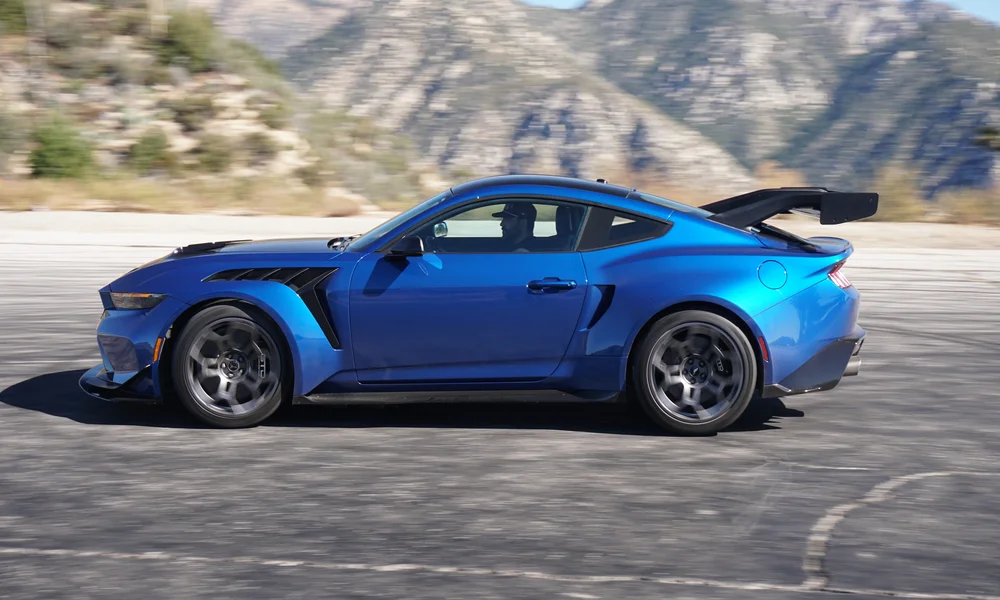
Even now, Ford continues to lean on the legacy these cars built, reviving the GT nameplate for a modern supercar and keeping the Shelby badge alive on high-performance Mustangs. That willingness to keep drawing from its own history says a lot about how deeply these early cars shaped what Ford’s performance identity actually means, decades after they first hit the road or the racetrack.
Conclusion
From a purpose-built race car chasing Ferrari to a pony car that rewrote the rules of what an affordable sports coupe could be, Ford’s most influential performance cars share a common thread of ambition backed by real engineering. Each one pushed the company, and often the entire industry, in a new direction. Together, they explain why Ford’s performance reputation has stayed so strong for well over half a century.